When kids are learning a language, they do not always know exactly what to say next. That is where filler words come in.
Filler words are sounds or short words that native speakers use every day while they think, remember, or transition to their next idea. Kids use them a lot because they are learning to process language in real time. Adults use them too, even if we do not always notice.
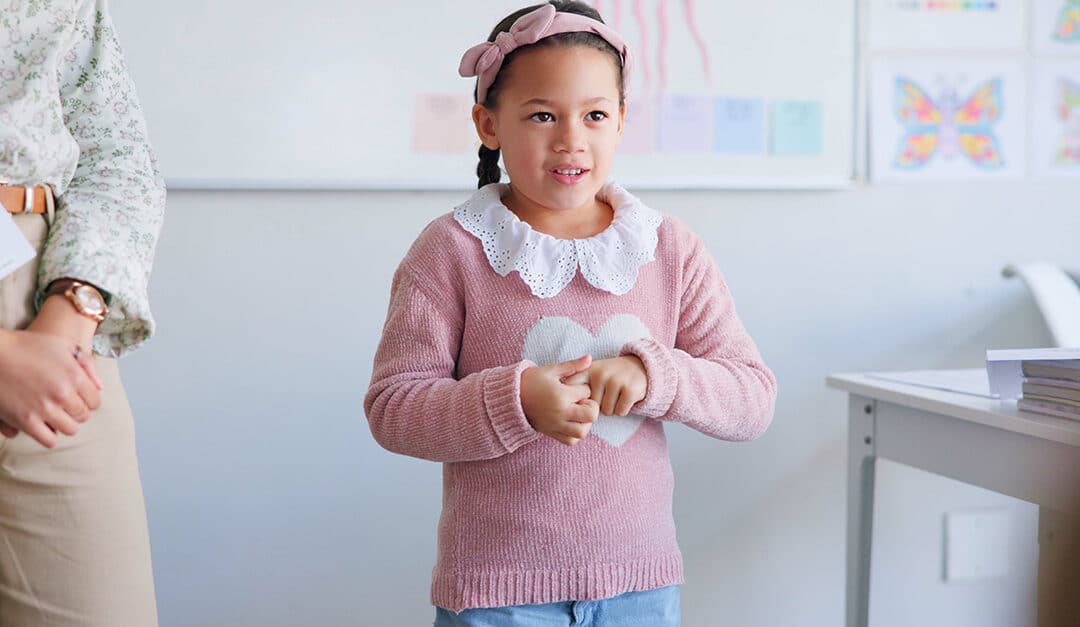
These words do not change the meaning of a sentence. You could remove them completely and the message would stay the same. That is why teachers often encourage kids to limit filler words during school presentations so their ideas sound clearer and more confident.
Still, filler words are an important part of natural speech. If your child is learning Spanish, understanding them helps with listening comprehension and makes their own speech sound more authentic over time.
Below are five of the most common Spanish filler words kids use and how you will hear them in real conversations.
Why Spanish Filler Words Are Important for Kids
Filler words help children do a few important things when learning Spanish:
- Buy time while thinking about what to say next
- Transition between ideas in a conversation
- Sound more natural when listening to native speakers
- Build confidence during spontaneous speech
The key is balance. Using filler words occasionally is natural. Overusing them can interrupt flow. Exposure and practice help kids learn when and how to use them naturally.
Top 5 Spanish Filler Words Kids Use
1. Mmmm
This is one of the most common filler sounds in Spanish for both kids and adults. It usually means someone is thinking or trying to remember what to say next. You will often hear it during presentations or when a child forgets their lines.
Examples:
¿Qué fue lo que más te gustó de la película?
Mmmm… ¡La princesa!
En México, el 15 de septiembre se celebra… mmm…
2. Eh
Eh is another very common filler sound, especially during school presentations. Kids often repeat it while trying to remember facts or organize their thoughts.
Examples:
El sistema solar se forma por… eh… el Sol y… eh… los planetas como Mercurio, Venus, Tierra… eh… Júpiter…
¿Te acuerdas cuándo es la fiesta de cumpleaños de tu amiga Andy?
Eh… no.
3. Este
Este is extremely common in everyday Spanish. Kids and adults use it when they need a moment to think or while continuing a story. Sometimes it fills a pause. Other times it becomes a habit inserted naturally into speech.
Examples:
Y entonces… este… Paul le dijo a Addison… este… que ya no quería ser su amigo.
¿Qué dejó la maestra de tarea?
Este… ya no me acuerdo.
4. Oye
Oye is often used to get someone’s attention, similar to saying “hey” in English. Kids use it frequently, especially when they are excited or asking many questions in a row.
Examples:
Oye, ¿trajiste la cartulina que pidió el maestro?
Oye, maestro, ¿usted sabe por qué los perros ladran? Oiga, oiga, por favor dígame por qué suenan diferente.
5. Pues
Pues is a word both kids and adults use constantly. As a filler, it can appear at the beginning, middle, or end of a sentence with no strong meaning attached. It often signals a pause or a transition.
Examples:
Pues… no sé qué más dijo la maestra. No presté mucha atención.
No me regañes, pues.
Should Kids Learn Spanish Filler Words on Purpose?
Kids do not need to memorize filler words like vocabulary lists. They pick them up naturally by listening to native speakers and practicing conversation in real contexts.
The goal is exposure, confidence, and consistent speaking practice. Over time, kids learn when these words sound natural and when they are unnecessary.
Help Your Child Speak Spanish More Naturally with TruFluency Kids
Learning Spanish filler words alone will not make your child fluent. Real fluency comes from meaningful conversation, confidence, and consistent practice.
At TruFluency Kids, we offer online Spanish immersion classes taught by native teachers. Kids learn Spanish through fun, engaging activities that keep them motivated and excited to participate, including:
Using our Bellieu Method, kids are encouraged to speak from day one. This builds confidence and helps Spanish feel natural, not forced.
Ready to help your child speak Spanish with confidence? Sign up for our next four week TruFluency Kids Spanish immersion session and give your child the tools to sound natural, confident, and fluent.