Listening, along with speaking, is one of the hardest skills for language learners to master. That applies to adults and kids alike.
If your child is learning Spanish, struggling with listening comprehension is completely normal. Spanish introduces new sounds, rhythms, and accents that may not exist in their native language. On top of that, Spanish varies widely by region, so understanding one speaker does not always mean understanding them all.
That can feel frustrating for kids. And frustration can quickly turn into resistance if it is not handled with patience and encouragement.
The good news is that listening skills can absolutely be developed with the right approach. Below are three simple, effective strategies you can use at home to help your child become a more confident Spanish listener.
1. Practice Active Listening in Spanish
Active listening is one of the most powerful tools for building both listening and speaking skills. It requires focus, but the payoff is huge over time. To practice active listening, your child needs to be fully present when hearing Spanish.
Here are a few ways to support that:
- Reduce distractions like toys, screens, or background noise
- Encourage eye contact and body language that shows they are paying attention
- Use facial expressions and gestures to show understanding, like looking surprised or excited when it fits the message
- Let the speaker finish, then respond with a related comment, question, or reaction
When it is your child’s turn to respond, pay attention to how they answer. If their response connects to what was said, they likely understood the message. If it does not, that is okay. It simply means they need more exposure and practice.
Remember, active listening with kids takes patience.
They will get distracted.
They will miss things.
They will not understand everything, especially in the beginning.
That is all part of the learning process. Progress comes from consistency, not perfection.
2. Build Spanish Listening Into Bedtime Stories
One of the easiest ways to practice Spanish listening is by using routines your child already has. Daily routines create predictability, which helps kids feel safe and relaxed while learning. You can naturally add Spanish into moments like:
- Breakfast time for food vocabulary
- Bath time for body parts and actions
- Bedtime for listening practice
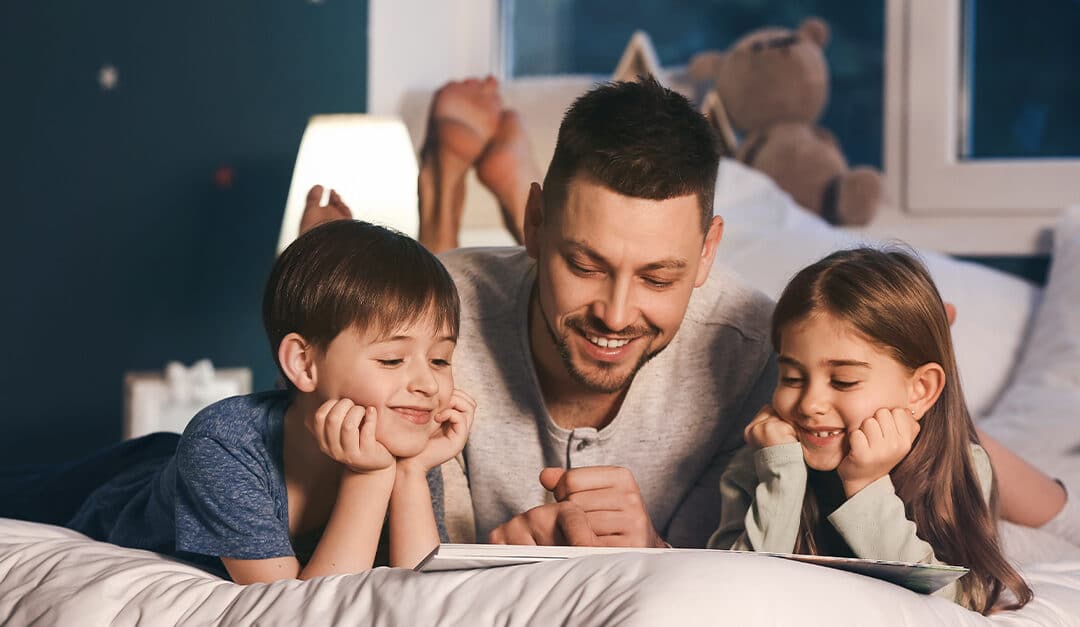
Bedtime stories, in particular, are perfect for developing listening skills.
Most parents already tell stories before bed, so switching to Spanish does not require creating a brand new habit. You can:
- Tell a familiar story in Spanish
- Make up a simple story using basic vocabulary
- Read a Spanish story out loud
If you are reading from a book, have your child listen rather than follow along with the text. The goal is to train their ear, not rely on visual clues.
When children focus only on your voice, they practice processing meaning through sound, rhythm, and context. That is exactly how listening skills grow.
3. Use Gestures to Support Understanding
Gestures are an incredibly helpful tool for language learning, especially for kids.
Facial expressions and body movements add context and meaning to what is being said. For example, if you smile while saying “estoy feliz,” your child can easily connect the phrase to the emotion.
Gestures help by:
- Providing visual clues that support comprehension
- Reducing frustration when vocabulary is unfamiliar
- Helping kids remember words and phrases more easily
Whenever you speak Spanish with your child, exaggerate your expressions and movements. It may feel silly, but it works. Gestures act as a bridge between what your child hears and what they understand.
How TruFluency Kids Supports Spanish Listening Skills
One of the most effective ways to strengthen Spanish listening skills is through guided, immersive instruction.
TruFluency Kids offers online Spanish classes designed specifically for children. Lessons focus on all language skills, including listening, speaking, grammar, reading, and writing. Classes are immersive, which means Spanish is used almost all the time. This constant exposure helps kids train their ears naturally and comfortably.
In class, students may:
- Sing
- Dance
- Cook
- Play games
- Read
All in Spanish.
Lessons are built around the Bellieu Method, which emphasizes speaking and listening from day one. Kids hear real Spanish, respond in Spanish, and build confidence through repetition and meaningful interaction.
Want to help your child feel more confident understanding and speaking Spanish? Drop into a lesson with TruFluency Kids today to see what we’re all about, and give your child the support they need to strengthen their Spanish listening skills in a fun, engaging way.