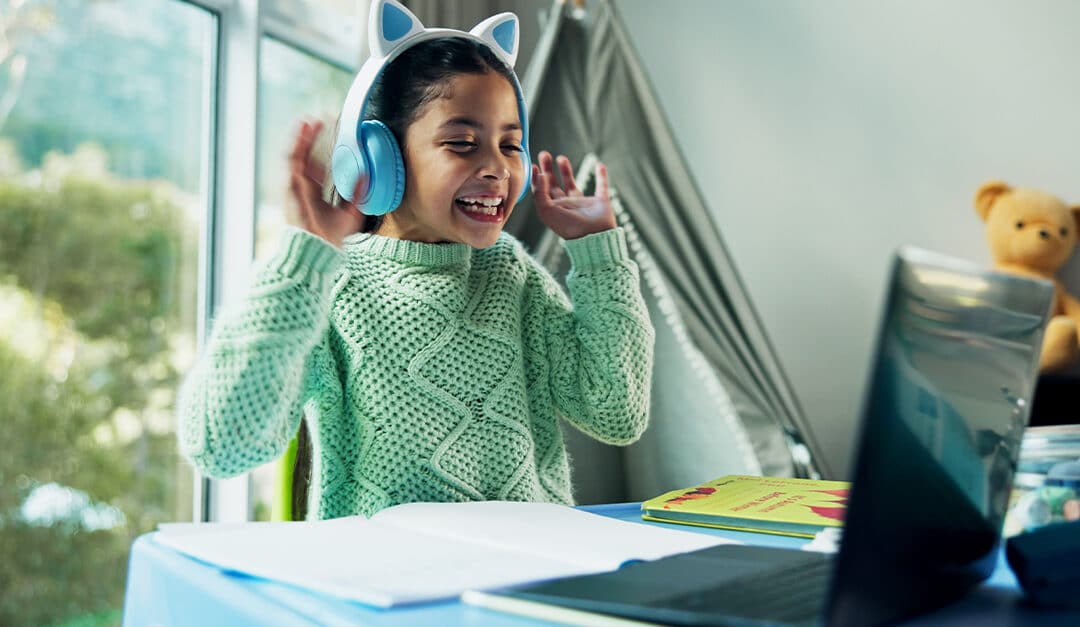
Online Spanish classes for kids can help children build stronger pronunciation, listening skills, and speaking confidence through live practice with interactive teachers. Spanish pronunciation can feel tricky at first, especially when children are learning sounds that do not exist in the same way in English, such as the rolled r, the double rr, and certain letter combinations like gua or j.
The good news is that pronunciation practice can be fun. When kids say silly, long, or challenging Spanish words out loud, they get to experiment with sounds, laugh at mistakes, and build confidence. These 10 Spanish words are great for practicing pronunciation at home or as part of a fun online Spanish lesson.
How Can Kids Improve Spanish Pronunciation?
- Kids improve Spanish pronunciation through regular listening and speaking practice.
- Tricky words help children practice sounds like r, rr, j, g, and gua.
- Pronunciation games make practice feel fun instead of frustrating.
- Mistakes are normal and help kids learn how Spanish sounds work.
- Live online Spanish classes give children guided speaking practice with supportive teachers.
Why Spanish Pronunciation Can Be Tricky for Kids
Spanish pronunciation is more consistent than English in many ways, but some sounds still take practice. Children may have trouble with certain letters because their mouths are used to making English sounds.
For example, many English-speaking children find the Spanish r difficult because it can sound different depending on where it appears in a word. The double rr is even more challenging because it often requires a rolled sound.
Other sounds, such as j, g, and gua, may also feel unfamiliar at first. That is completely normal. Pronunciation improves gradually as children hear Spanish often, repeat words out loud, and receive gentle correction from teachers.
Why These Spanish Words Are Great for Pronunciation Practice
The words in this list are useful because they include sounds that Spanish learners often need to practice. Some are short and manageable. Others are long, funny, and almost like tongue twisters.
They help kids practice:
- The Spanish r and rr
- Harder consonant combinations
- The Spanish j sound
- The gua sound
- Longer Spanish word patterns
- Confidence speaking out loud
The goal is not perfection on the first try. The goal is to help your child hear the difference, try the sounds, and keep practicing.
10 Fun and Tricky Spanish Words for Kids to Practice
1. Aguja
Meaning: Needle
Pronunciation help: ah-goo-hah
Aguja is a short word, but it is still useful for pronunciation practice. It includes the g sound and the Spanish j sound in one word. For many English speakers, the Spanish j feels different because it is pronounced more like a strong h sound.
Try saying it slowly first: a-gu-ja Then repeat it a little faster.
2. Desarrollador
Meaning: Developer
Pronunciation help: deh-sah-rroh-yah-dohr
Desarrollador is a great word for practicing several Spanish sounds at once. It includes a soft r, a double rr, and the ll sound.
This word may be more challenging for younger children, but older kids may enjoy it because it feels like a pronunciation challenge. It is also a real-world vocabulary word used in technology and professional settings.
Practice tip: Break it into smaller parts. de-sa-rro-lla-dor
3. Otorrinolaringólogo
Meaning: Ear, nose, and throat doctor
Pronunciation help: oh-toh-rree-noh-lah-reen-goh-loh-goh
Otorrinolaringólogo is long, funny, and challenging. That makes it perfect for pronunciation practice. This word includes multiple r sounds, including the double rr. It also helps kids practice longer Spanish rhythm and syllable patterns.
You can make it into a game by seeing who can say it slowly without stopping. Once your child gets comfortable, try saying it a little faster.
4. Ronronear
Meaning: To purr
Pronunciation help: rrohn-rroh-neh-ahr
Ronronear is a fun word for kids because the meaning is easy to connect with cats. It also gives children a chance to practice the rolled r sound more than once.
Because this word sounds a bit like the action it describes, it can be especially memorable for younger learners.
Try asking: ¿El gato puede ronronear? (Can the cat purr?)
5. Refrigerador
Meaning: Refrigerator
Pronunciation help: rreh-free-heh-rah-dohr
Refrigerador looks similar to the English word “refrigerator,” but the pronunciation is different in Spanish.
This word is helpful because it includes several r sounds and a Spanish g sound. It also gives kids a useful household vocabulary word they can practice in daily life.
You can point to the refrigerator and ask: ¿Dónde está el refrigerador? (Where is the refrigerator?)
6. Paraguas
Meaning: Umbrella
Pronunciation help: pah-rah-gwahs
Paraguas is a practical word that helps kids practice the gua sound. In this word, gua sounds similar to gwa, like the beginning of “water” but with a Spanish rhythm.
This is a great word to practice on a rainy day. When kids can connect Spanish to something happening in real life, vocabulary becomes easier to remember.
Try saying: Necesito un paraguas. (I need an umbrella.)
7. Infraestructura
Meaning: Infrastructure
Pronunciation help: een-frah-ehs-trook-too-rah
Infraestructura is a long word with several consonant combinations. It can be tricky because kids need to move from one sound to the next smoothly.
This word is best for older children or more advanced Spanish learners. It helps students practice longer words, Spanish rhythm, and clear syllable separation.
Practice tip: Clap each syllable as you say it. in-fra-es-truc-tu-ra
8. Ferrocarril
Meaning: Railroad
Pronunciation help: feh-rroh-kah-rreel
Ferrocarril is one of the best words for practicing the Spanish double rr because it appears twice.
This word can be difficult, but it is also satisfying once kids start to say it more confidently. If your child cannot roll the rr yet, that is okay.
They can still practice the rhythm and keep improving over time.
Try turning it into a tongue-twister challenge.
9. Esternocleidomastoideo
Meaning: Sternocleidomastoid, a muscle in the neck
Pronunciation help: ehs-tehr-noh-klay-doh-mahs-toy-deh-oh
Esternocleidomastoideo is a very long word that even native Spanish speakers may use as a pronunciation challenge. It is not a word most children will need in everyday conversation, but it is excellent for practicing syllables, pacing, and confidence.
For kids who enjoy science, anatomy, or big words, this can be a fun challenge word.
Practice tip: Divide it into sections. es-ter-no-clei-do-mas-toi-de-o
10. Parangaricutirimícuaro
Meaning: A playful word connected to Paricutín, a volcano, and Parangaricutiro, a town in Michoacán, Mexico
Pronunciation help: pah-rahn-gah-ree-koo-tee-ree-mee-kwah-roh
Parangaricutirimícuaro is famous as a challenging Spanish word. It is often used in Mexico as a fun pronunciation test because it is long, rhythmic, and easy to stumble over.
This word is not everyday vocabulary, but it is perfect for a family pronunciation game. Kids can try saying it slowly, then faster, then as part of a friendly challenge.
How Parents Can Make Spanish Pronunciation Practice Fun
Spanish pronunciation practice works best when it feels playful. Children do not need to sit and repeat words for long periods of time. Short, fun practice is often more effective.
Try these simple ideas at home:
- Pick one tricky Spanish word of the day.
- Say the word slowly together.
- Clap out the syllables.
- Use the word in a simple sentence.
- Make it a family pronunciation challenge.
- Let your child teach the word to someone else.
- Celebrate effort, not perfect pronunciation.
For younger children, keep the practice light and silly. For older kids, you can add more explanation about how the sounds work.
Why Speaking Practice Matters in Online Spanish Classes for Kids
Pronunciation improves when children speak regularly and hear Spanish from fluent or native-level speakers. That is one reason live online Spanish classes can be so helpful.
At TruFluency Kids, children and teens ages 4 to 12 learn Spanish through interactive online classes with engaging teachers. Lessons are designed to help students use Spanish in real conversations, not only memorize vocabulary lists.
Depending on the class, students may practice Spanish through:
- Conversation
- Games
- Songs
- Stories
- Reading
- Writing
- Crafts
- Movement
- Everyday vocabulary
This kind of practice helps children hear how Spanish sounds, try new words out loud, and become more comfortable speaking over time.
Group vs. Private Online Spanish Classes for Kids
Parents often wonder whether group Spanish classes or private Spanish lessons are the better fit. Both options can help kids improve pronunciation and speaking confidence.
Group Spanish Classes
Group classes are a good option for children who enjoy learning with other kids. They can hear classmates speak, participate in games, and practice Spanish in a social setting.
Group classes may work well for kids who:
- Enjoy interactive activities
- Like learning with peers
- Feel motivated by group games
- Benefit from a consistent class routine
Private Spanish Lessons
Private lessons give children more one-on-one speaking time with the teacher. This can be especially helpful for pronunciation because the teacher can slow down, repeat sounds, and give personalized feedback.
Private classes may work well for kids who:
- Need extra pronunciation support
- Feel shy speaking in groups
- Are learning at a faster or slower pace
- Have specific goals for Spanish fluency
FAQ
How can kids improve Spanish pronunciation?
Kids can improve Spanish pronunciation by listening to Spanish regularly, repeating words out loud, practicing tricky sounds, and speaking with a teacher who can gently correct pronunciation.
Are online Spanish classes good for pronunciation practice?
Yes. Online Spanish classes can be very helpful for pronunciation when they include live speaking practice, teacher feedback, listening activities, and interactive conversation.
What Spanish sounds are hardest for kids to pronounce?
Many English-speaking kids find the Spanish r, double rr, j, and gua sounds challenging. With practice, these sounds become easier and more natural.
Help Your Child Build Confidence Speaking Spanish
Tricky Spanish words can be a fun way to help your child practice pronunciation, but real progress comes from consistent speaking practice. The more children hear Spanish, say words out loud, and use the language in meaningful ways, the more confident they become.
TruFluency Kids offers online Spanish classes for children and teens ages 4 to 12, with both group classes and private packages available.
Ready to help your child speak Spanish with more confidence? Book a group class to try it out, explore TruFluency Kids private lesson packages, or choose the online Spanish class option that best fits your child’s goals.