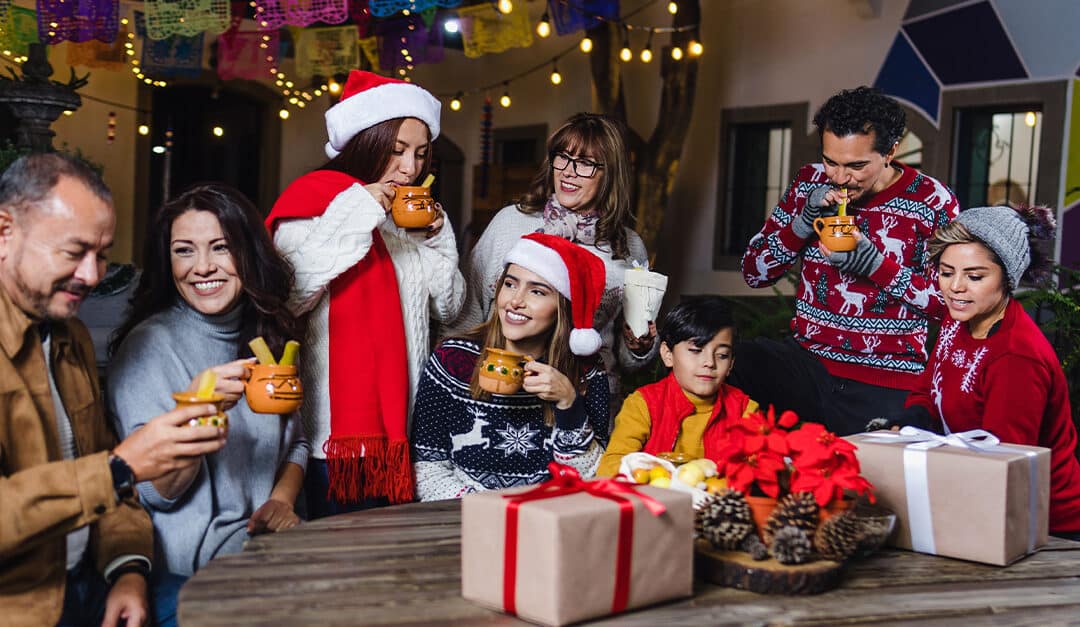
Bienvenido a México. Holidays in Mexico are full of color, joy, and tradition, which makes it a wonderful place to experience Christmas with kids. Even if you cannot travel there, you can still celebrate at home using Mexican Christmas traditions. This is a fun way to immerse your children in both Spanish language and culture.
If you have ever wondered what Christmas Day is like in Mexico, or how Mexican families celebrate Nochebuena and December 25, this guide will walk you through a typical celebration and give you ideas you can copy at home. Don’t forget to add Spanish words and phrases about Christmas into these activities so your kids can practice the language!
Nochebuena: Christmas Eve in Mexico
In Mexico, Nochebuena (Christmas Eve) is usually the most important part of the celebration. Families gather for a special dinner, play games, and stay up until midnight to welcome Christmas together.
“Compras de pánico” – Last-minute shopping
On the morning of December 24, many people are still shopping for the big meal or for forgotten gifts. Supermarkets are full of families buying ingredients for la cena navideña (Christmas Eve dinner). Shopping malls are also busy with people looking for last-minute presents.
This rush of last-minute errands is jokingly called “compras de pánico” (panic buying). It usually happens in the last days before Christmas and often continues into the morning of the 24th.
You can recreate this tradition by taking your kids along for a quick grocery trip or having them help you make a final checklist for dinner.
Enjoying a relaxed morning
If you have everything prepared and do not need any panic shopping, you can enjoy a calmer morning. Many Mexican families who have the day off use this time to:
- Have coffee or breakfast with loved ones
- Take children to the mall to see Santa
Watch a Christmas movie
Movie theaters and restaurants often open on December 24, although they close earlier than usual. Supermarkets may stay open a bit later, while convenience stores usually remain open all day.
Work before the party
When Christmas Eve falls on a weekday, some people still have to work. A typical workday might be from 9:00 a.m. to 5:00 p.m. As soon as they finish, they hurry home to join their families and start getting ready for Nochebuena.
Preparing Christmas Eve Dinner
Many Mexican families start cooking early in the day, especially if they plan to serve several dishes. It can be busy and sometimes stressful, but it is also a special part of the tradition.
If someone suddenly realizes an ingredient is missing, that often leads to another quick supermarket trip, which adds to the “compras de pánico” feeling.
To make the process easier, some families prepare dishes that can be refrigerated one day before Christmas Eve. Others share the work so that every person brings a dish to the dinner.
Kids usually love to help. One common child-friendly task is making ensalada de manzana (apple salad). Adults can cut the apples, and children can mix everything carefully in a large bowl.
Typical foods for a Mexican Christmas Eve dinner include:
- Turkey – Pavo
- Pork leg – Pierna de cerdo
- Apple salad – Ensalada de manzana
- Tamales – Tamales
- Romeritos with mole – Romeritos con mole
- Cod – Bacalao
Popular drinks include:
- Fruit punch – Ponche de frutas
- Cider – Sidra
Families also prepare snacks to enjoy before the main meal.
Getting Dressed Up
Another favorite part of the evening is getting dressed. Many people wear their nicest outfits for Nochebuena. You will see shiny dresses, sequins, elegant shoes, and beautiful accessories. Stores often fill their racks with glittery holiday looks during December.
Children also dress up in special clothes, just more comfortable and age appropriate. Some families still prefer cozy traditions like matching Christmas pajamas or ugly Christmas sweaters instead of formal outfits. Both are common and perfectly okay.
Party Time Before Dinner
As the evening begins, guests arrive, snacks are served, and the party starts. Before sitting down for dinner, families usually:
- Talk and catch up
- Eat appetizers and small bites
- Play board games or party games
- Offer small prizes or gifts to game winners
This is a time to relax, laugh, and connect. It is also a great opportunity for your kids to practice simple Spanish phrases, such as:
- Feliz Navidad – Merry Christmas
- ¿Cómo estás? – How are you?
- Gracias – Thank you
Midnight: “¡Feliz Navidad!” and Dinner
At midnight, the clock strikes 12:00 and Christmas officially begins. At that moment, families in Mexico often:
- Hug each other and say “Feliz Navidad”
- Make a toast, usually with cider
- Sit down together to enjoy the main meal
Some families start eating a little earlier if everyone is very hungry, but many try to begin dinner at or just after midnight. The food is served in large trays so everyone can enjoy seconds. Mexican families love to savor the dishes and often go back for more.
Gifts on Christmas Eve
Gift-giving is not required, but many families choose to exchange presents during the Nochebuena celebration.
All the wrapped gifts are placed under the Christmas tree earlier in the evening. Later, at a chosen time, each person gives their gift to the recipient, who usually opens it right away. Because Mexican culture is very warm and affectionate, gifts are often given with a hug and a “muchas gracias.”
Children who receive toys might start playing with them immediately while adults continue to eat, talk, or play games.
The Shoe Under the Tree
Before going to sleep, many children in Mexico leave one of their shoes under the tree. This helps Santa, or other gift-bringers depending on the family tradition, know where to place each child’s presents.
Parents often tell their kids, “Si no te vas a dormir, Santa no va a venir” (“If you do not go to sleep, Santa will not come”) to encourage them to go to bed. Children may still peek out the window, hoping to catch a glimpse of Santa’s sleigh.
While the kids sleep, adults continue the celebration. They might keep talking, eating, or listening to music until they finally feel ready to sleep.
Heading Home with Leftovers
When it is time for guests to leave, it is common for the hosts to send them home with leftovers. They fill a plastic container or disposable plate with food from the dinner so guests can enjoy it later in the comfort of their homes.
Christmas Day in Mexico
Now it is December 25: Christmas Day. Many offices and workplaces give employees this day off, which allows families to rest and spend time together.
Opening Santa’s Gifts
As soon as children wake up, they run straight to the tree to see what Santa brought. Sometimes they wake their parents first so everyone can enjoy the moment together. Watching kids open their gifts and play with them is one of the sweetest parts of Christmas morning.
“Recalentado” – The famous leftovers
In Mexico, “recalentado” is the word for reheated leftovers from Christmas Eve. On December 25, families proudly say they are going to eat recalentado, and it is considered part of the tradition.
If the Christmas Eve dinner was large, the leftovers may last for several days. People usually enjoy them, although they might eventually get tired of eating the same dishes if the food lasts too long.
Recalentado can be eaten at any time of day. Some families still go out for breakfast to a café or restaurant, then eat leftovers for the main meal in the afternoon.
Play and Relax
For the rest of the day, kids usually play with their new toys. Cousins and friends might come over so everyone can play together. Adults relax, talk, clean up from the night before, and help assemble any toys that need building.
Families might also watch a Christmas movie at home or go to the movie theater, which often stays open on December 25.
Give Your Kids the Gift of Spanish Fluency
If you love the idea of celebrating Christmas like a Mexican family and surrounding your kids with Spanish, you can continue that immersion all year long with TruFluency Kids Spanish immersion classes.
Our native-speaking teachers are fully committed to your child’s Spanish learning journey. Classes are filled with fun, real-life activities, such as:
- Singing and dancing
- Playing games
- Reading stories
- Doing crafts
- Even cooking simple recipes in Spanish
All lessons are based on the Bellieu Method, created by our founder and CEO, Micah Bellieu. In every class, students speak Spanish and use what they have learned, which helps them build real conversational fluency.
You can see it for yourself. Enroll your child in two trial classes of one hour each for only $9. Classes are small, with no more than six students, so your child receives lots of attention. After the class, you can also join a Q&A for parents to get all your questions answered.
Christmas in Mexico is full of warmth, family, and tradition. With TruFluency Kids, you can bring that same spirit of connection and language learning into your home all year long.