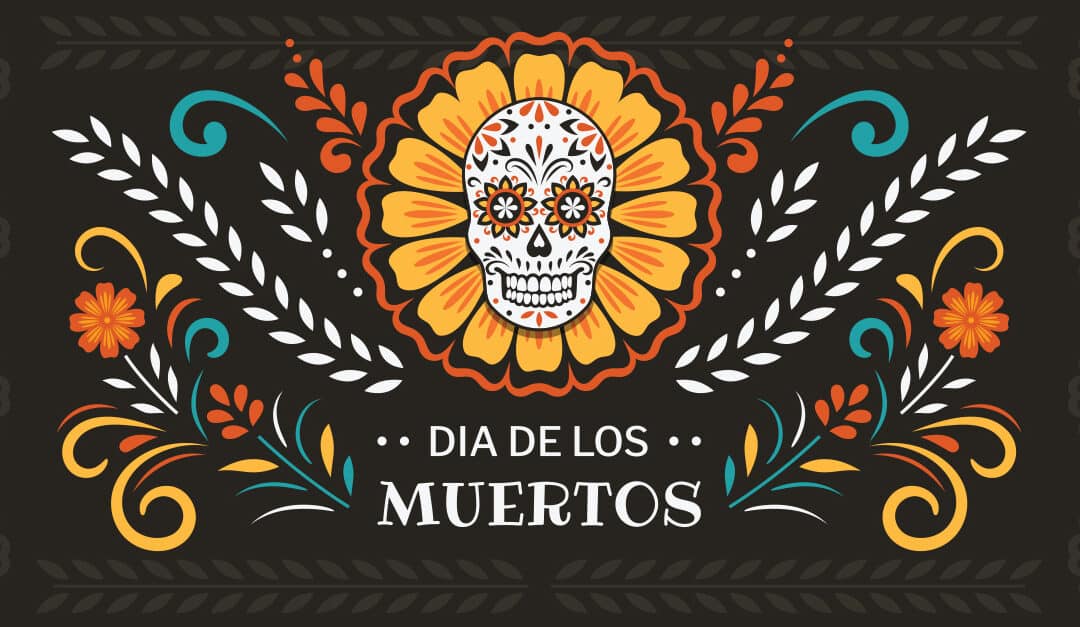
The most important Day of the Dead Spanish vocabulary for kids includes “Día de Muertos” (Day of the Dead), “ofrenda” (altar), “flores de cempasúchil” (marigolds), “pan de muerto” (bread of the dead), “calaverita de azúcar” (sugar skull), “papel picado” (cut tissue paper), “vela” (candle), and “Catrina” (the elegant skeleton lady).
Día de Muertos is celebrated mainly on November 1 and 2, when families in Mexico welcome back the spirits of loved ones who have died with food, flowers, music, and memories. Below you’ll find the history of the holiday, vocabulary tables, phrases and questions to use at home, and simple activities that help kids learn Spanish while honoring a beautiful tradition.
I’m Micah Bellieu, a language teacher for more than 20 years, the founder of two language schools, the author of How to Raise a Bilingual Child, and a mom raising a trilingual daughter. Holidays like Día de Muertos are some of the best moments to bring Spanish into your home, because kids remember what they live far longer than anything they memorize.
What Is Día de Muertos?
Día de Muertos is a Mexican tradition that honors and remembers family members and friends who have passed away. Families believe that during these days, the souls of their loved ones return to the world of the living to visit.
To welcome them, families build an “ofrenda” filled with photos, candles, flowers, and the foods and drinks their loved ones enjoyed in life. The spirits are said to enjoy the essence of the food, and then families share it together.
Although it falls right after Halloween and both use skulls and skeletons, Día de Muertos is a very different celebration. It’s joyful, colorful, and deeply meaningful, a time to celebrate life and keep loved ones’ memories close. Its importance is recognized around the world: UNESCO has listed the Indigenous festivity dedicated to the dead as part of the Intangible Cultural Heritage of Humanity.
The History of the Day of the Dead
The roots of Día de Muertos go back thousands of years to Indigenous cultures in Mexico, including the Mexica (Aztecs). In pre-Hispanic times, the dead were often wrapped in a “petate,” a woven mat made from palm fibers, and families held ceremonies to help the soul on its journey to Mictlán, the underworld where the dead would rest. Mictlán was ruled by Mictecacíhuatl, the Lady of the Dead, and her husband, Mictlantecuhtli.
When the Spanish arrived in the 1500s, they brought Catholic holidays with them: “Día de Todos los Santos” (All Saints’ Day) on November 1 and “Día de los Fieles Difuntos” (All Souls’ Day) on November 2. Over centuries, Indigenous beliefs and Catholic traditions blended together, creating the Día de Muertos celebrated today.
Day of the Dead Dates: Who Is Remembered Each Day
November 1 and 2 are the main days, but in many parts of Mexico the celebration starts earlier, with different days set aside to remember different souls. Traditions vary from region to region and family to family, so think of this as a common pattern rather than a fixed rule.
| Date | Who is remembered |
| October 27 | Pets who have died (las mascotas) |
| October 28 | People who have died suddenly or in accidents |
| October 29 | People who have drowned |
| October 30 | Forgotten souls with no family to remember them |
| October 31 | Children who died before being baptized |
| November 1 | Children (los angelitos) |
| November 2 | Adults |
Why Celebrate Día de Muertos With Your Kids?
Language and culture go hand in hand. When kids learn about a tradition from a Spanish-speaking country, the words come with stories, colors, smells, and feelings attached, and that’s exactly what makes vocabulary stick. A child who has helped place marigolds on an ofrenda will remember “cempasúchil” long after a vocabulary list is forgotten.
Día de Muertos also gives families a gentle, loving way to talk about grandparents, relatives, and even pets who have passed away. Many families who discover the tradition keep it for years, because it offers a beautiful way to remember the people they love. And for kids who are learning Spanish, it’s a rich, exciting reason to use the language at every level, from naming colors on a sugar skull to telling a story about a great-grandparent.
How Día de Muertos Is Celebrated
The Ofrenda
The heart of the celebration is the “ofrenda,” also called the “altar de muertos.” Families set it up at home, and you’ll also see ofrendas in town squares, schools, restaurants, and museums. Each item on the ofrenda has a meaning.
| Item (Spanish) | English | What it means |
| Fotos | Photos | Show who is being honored |
| Flores de cempasúchil | Marigolds | Their bright color and scent guide the souls home |
| Velas | Candles | Light the way for the spirits |
| Copal | Copal Incense | Purifies the space |
| Agua | Water | Quenches the thirst of the souls after their journey |
| Sal | Salt | Represents purification |
| Pan de muerto | Bread of the dead | A special sweet bread shared with the souls |
| Calaveritas de azúcar | Sugar skulls | Often decorated with the person’s name |
| Papel picado | Cut tissue paper | Colorful banners that decorate the altar |
| Comida favorita | Favorite foods | The dishes and treats the loved one enjoyed |
| Arco | Arch | Marks the doorway between worlds |
Visiting the Cemetery
Many families visit the “panteón” (cemetery) to clean and decorate the graves of their loved ones with marigolds, candles, and favorite foods. Some stay through the night, sharing stories, music, and meals.
The Mexico City Day of the Dead Parade
The huge Day of the Dead parade in Mexico City, with giant Catrinas, painted faces, and dancers, is surprisingly new. It started in 2016, inspired by a parade scene in the 2015 James Bond movie Spectre. The scene was so popular that the city created a real parade, and it has become a beloved yearly event.
Calaveritas Literarias
“Calaveritas literarias” are short, funny rhyming poems written as if the person were already a skeleton. People write them about friends, teachers, and even politicians, and kids often write them at school. They’re playful, and they’re a fun writing challenge for older Spanish learners.
Day of the Dead Spanish Vocabulary for Kids
Ofrenda and Decoration Words
| English | Spanish |
| Day of the Dead | Día de Muertos / Día de los Muertos |
| Tradition | Tradición |
| Celebration | Celebración |
| To remember | Recordar |
| To honor | Honrar |
| Loved ones | Seres queridos |
| Souls / Spirits | Almas / Espíritus |
| Ancestors | Antepasados |
| The world of the living | El mundo de los vivos |
| October / November | Octubre / Noviembre |
| Altar / Offering | Altar / Ofrenda / Altar de muertos |
| Marigolds | Flores de cempasúchil |
| Candle | Vela |
| Cut tissue paper | Papel picado |
| Photo | Foto |
| Cross | Cruz |
| Arch | Arco |
| Incense | Copal / Incienso |
Food Words
| English | Spanish |
| Bread of the dead | Pan de muerto |
| Sugar skull | Calaverita de azúcar |
| Chocolate skull | Calaverita de chocolate |
| Hot chocolate | Chocolate caliente |
| Tamales | Tamales |
| Fruit / Orange | Fruta / Naranja |
| Glass of water | Vaso de agua |
Characters and Places
| English | Spanish |
| Skull | Calavera |
| Skeleton | Esqueleto / Calaca |
| Elegant skeleton lady / man | Catrina / Catrín |
| Cemetery | Cementerio / Panteón |
| Grave | Tumba |
| Parade | Desfile |
| Rhyming skeleton poem | Calaverita literaria |
| Hairless dog that guides souls | Xoloitzcuintle (Xolo) |
Spanish Phrases for the Día de Muertos
Kids can use these phrases while building an ofrenda, eating pan de muerto, or talking about the holiday with family and friends.
| Spanish | English |
| Mi tradición favorita es el Día de Muertos. | My favorite tradition is the Day of the Dead. |
| ¿Qué vamos a poner en nuestra ofrenda? | What are we going to put on our ofrenda? |
| Quiero poner una foto de mi abuelito. | I want to put a photo of my grandpa. |
| A mi abuelita le encantaba el chocolate. | My grandma loved chocolate. |
| ¡Hay muchas flores de cempasúchil! | There are so many marigolds! |
| ¿Me ayudas a poner las velas? | Can you help me put out the candles? |
| Lo que más me gusta es el pan de muerto. | What I like most it the bread of the dead. |
| ¿Podemos ver Coco en español? | Can we watch Coco in Spanish? |
| Escribí una calaverita literaria. ¿La quieres escuchar? | I wrote a calaverita literaria. Do you want to hear it? |
| ¿Puedo comerme la calaverita de azúcar? | Can I eat the sugar skull? |
Day of the Dead Questions in Spanish to Ask Your Kids
Asking questions is one of the best ways to get kids speaking, and the order of the questions matters. In our classes, teachers start with the easiest questions and climb step by step.
A yes-or-no question lets a beginner show they understood with one word. A two-choice question puts the answer right inside the question. Then come “who” and “what” questions, and finally a question about the child’s own life. You can use the same ladder at home with any Día de Muertos picture or book.
| Step | Spanish | English |
| Yes or no | ¿Es una calavera? | Is it a skull? |
| Two choices | ¿Las flores son amarillas o azules? | Are the flowers yellow or blue? |
| Who | ¿Quién está en la foto? | Who is in the photo? |
| What | ¿Qué hay en la ofrenda? | What is on the ofrenda? |
| About your child | ¿Y tú? ¿Qué quieres poner en nuestra ofrenda? | And you? What do you want to put on our ofrenda? |
| About your child | ¿Qué es lo que más te gusta del Día de Muertos? | What do you like most about the Day of the Dead? |
| About your child | ¿Qué comida le gustaba a tu abuelito? | What food did your grandpa like? |
| About your child | ¿Te gustó el pan de muerto? | Did you like the bread of the dead? |
If your child answers in English, that’s completely normal. Simply give them the Spanish words for what they wanted to say, and let them try again if they’d like. Celebrate the attempt, and keep it relaxed. Kids speak more when Spanish feels safe and fun. Here are some tips to encourage your child to reply in Spanish.
Day of the Dead Activities for Kids in Spanish
Build a Family Ofrenda
Building your own ofrenda is a meaningful way to learn the tradition and the vocabulary at the same time. Choose a small table or shelf, add photos of loved ones, and decorate it with marigolds, candles, papel picado, and their favorite foods. As you work, name each item in Spanish and share a memory about each person.
Approach it with curiosity and respect for its Mexican roots, and your kids will learn both the language and the meaning behind it. Younger children often love remembering a family pet, which ties in perfectly with October 27.
Make Papel Picado
Fold sheets of colorful tissue paper and cut small shapes along the folds, then open them up to reveal the design. String them together to decorate your ofrenda. While you work, practice colors, shapes, and action words like “doblar” (fold), “cortar” (cut), and “colgar” (hang).
Try Pan de Muerto Together
Look for pan de muerto at a local Mexican bakery in late October, or bake it together at home. Talk about how it looks, smells, and tastes, using words like “dulce” (sweet), “suave” (soft), and “delicioso” (delicious). Supporting a local bakery is also a lovely way to connect your family with the Hispanic community near you.
Play Día de Muertos Lotería
Lotería is a traditional Mexican picture game that’s perfect for vocabulary practice. Make your own Day of the Dead version by drawing pictures of a vela, a calavera, the cempasúchil, and other words from the tables above. The caller says each word out loud in Spanish, and players mark the matching picture.
Watch Coco in Spanish
Pixar’s Coco is a wonderful introduction to Día de Muertos for kids, and its ofrendas, marigold bridge, and Xolo dog bring the vocabulary to life. Switch the audio to Spanish. Whatever kids don’t understand from the words, they’ll understand from the pictures. Afterward, chat about it with easy questions like “¿Quién es tu personaje favorito?” and let them answer however they feel comfortable.
Write a Calaverita Literaria
Older kids can try writing a short, silly rhyming poem. Here’s a simple one to inspire them: “La calaca muy contenta / vino a la fiesta a bailar, / pero comió tanto pan / ¡que ya no pudo ni saltar!” (The happy skeleton came to the party to dance, but ate so much bread that she couldn’t even jump!) Kids can write one about a family member, a pet, or a favorite character.
Find a Local Celebration
Many museums, libraries, and community centers host Día de Muertos events with ofrendas, music, face painting, and food. Going together lets your family hear Spanish from native speakers and see the tradition up close. It’s normal to feel a little shy at first. Every conversation, even a short one, builds confidence.
Keep Your Child’s Spanish Growing All Year
Holidays like Día de Muertos are a wonderful way to build vocabulary. To turn those words into real speaking, children also need regular conversation with someone who stays in Spanish. At home, parents are the easy option, since kids know you understand English. A small class with a native teacher creates a place where Spanish is the language your child actually uses.
At TruFluency Kids, classes average about three students, so every child speaks again and again in every class. Our teachers use the same question ladder you saw above, so even a brand-new student can answer in Spanish in their very first class. Kids meet twice a week, and with classes starting throughout the day, it’s easier to fit Spanish around soccer, music, and homework. If your child misses a class, our team will help you schedule a make-up.
We’ll also be honest with you about the timeline. Most kids need about a year of consistent classes before they can stay in Spanish for the whole class, and the families who see results are the ones who keep showing up. If you’ve already tried an app and felt let down, our comparison of Duolingo and TruFluency Kids explains the difference, and it’s an easy one to forward to your partner.
The best way to know if it’s working is to hear it for yourself. During your child’s first few weeks, listen in quietly from another room. That first answer in Spanish is a moment parents never forget. Try a TruFluency Kids class for $30 and hear the difference.
Bring TruFluency Kids to Your School
Teachers and school leaders, Día de Muertos is a beautiful unit, and your students deserve a chance to actually speak the Spanish they learn. Whether your school already has a Spanish program or not, TruFluency Kids gives students small-group speaking practice with native teachers, at about $3 per student per class.
California charter families, you can ask your charter school to add TruFluency Kids to your learning options. Contact our team to learn more.