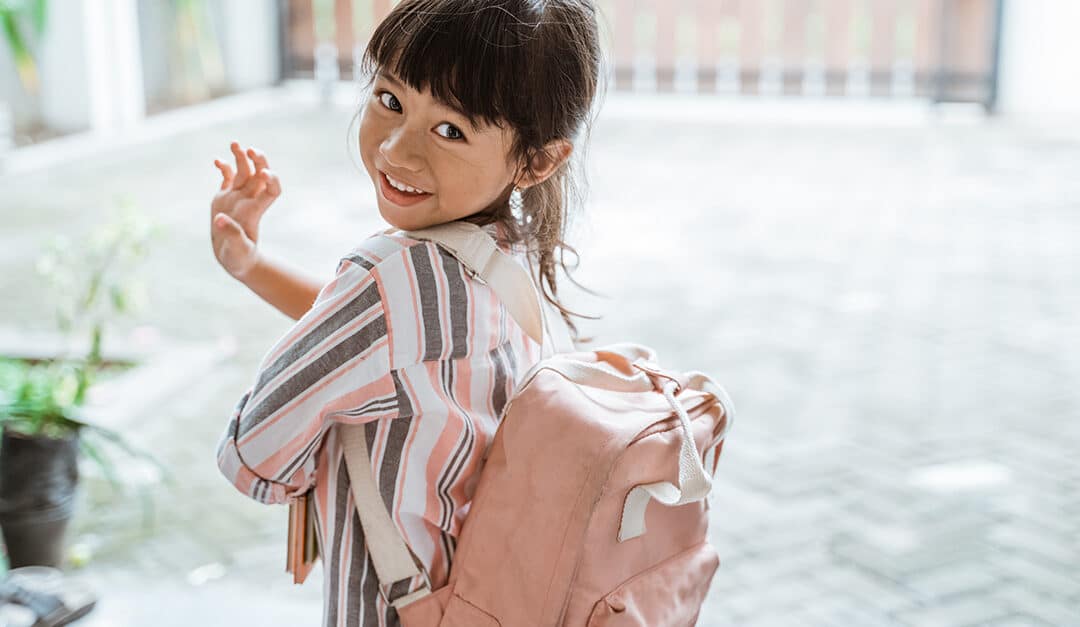
Saying goodbye is a simple way to show respect, kindness, and good manners. From teachers and parents to friends and neighbors, a polite farewell is always welcome.
If your child is learning Spanish, goodbye expressions should be some of the first phrases they learn. They are usually short and easy to remember, and kids can use them every single day.
Here are 7 different ways of saying goodbye in Spanish that children can start using right away.
1. Adiós
Let’s begin with the most common one: adiós.
Adiós literally means “goodbye,” and both kids and adults use it all the time. It works in almost every situation, both formal and informal.
Your child can say adiós to a teacher, a grandparent, or a friend at the park. It is simple, polite, and always correct.
Example:
¡Adiós, Lucy, me la pasé genial hoy jugando barbies!
Goodbye, Lucy, I had a great time today playing Barbies!
2. Hasta luego
Hasta luego is similar to “see you later.”
Kids can use it with almost anyone, but it sounds a little more serious than other casual expressions. It is common with:
- Teachers
- Coaches
- Doctors
- Parents of friends
Children can say hasta luego when they know they will see someone again, or even when they are not completely sure but want to sound kind and polite.
Example:
¡Hasta luego, maestra Lupita! ¡Feliz Navidad!
Goodbye, teacher Lupita. Merry Christmas!
3. Hasta pronto
Hasta pronto means “see you soon.”
This phrase is perfect for people your child hopes to see again. It sounds friendly and warm, and it can be used in both formal and informal settings.
Example:
When you pick up your kids from a playdate, they might say:
Hasta pronto, señor Luis.
See you soon, Mr. Luis.
4. Chao
Chao is a fun and informal way of saying goodbye in Spanish. It comes from the Italian word ciao, and it sounds very friendly and relaxed.
Kids usually use chao with:
- Close friends
- Siblings and cousins
- Parents and relatives
- People they feel very comfortable with
There is also a cute diminutive, chaito, that many children enjoy saying.
Example:
Chao, Leslie, gracias por prestarme tus crayolas en la clase de Español.
Ciao, Leslie, thanks for lending me your crayons in Spanish class.
5. Nos vemos
Nos vemos is another casual way to say goodbye. It is similar to “see ya” in English.
Children can use nos vemos with classmates, teammates, friends, and cousins. It feels relaxed and friendly, yet still respectful. Some kids also use it with adults they know well, like a beloved coach.
You can make it more specific by adding extra information:
- Nos vemos en la fiesta – See you at the party
- Nos vemos pronto – See you soon
Example:
Nos vemos, Paola. ¡Que te vaya bien en tu recital de ballet!
See you, Paola. Hope your ballet recital goes well!
6. Que te vaya bien
Que te vaya bien is a nice way to wish someone well as they leave. It is similar to “hope everything goes well for you” or “take care.”
Often it is used together with another goodbye word, such as adiós, chao, or bye, but it can also stand on its own while the child waves goodbye.
Example:
Que te vaya bien, Gloria, me saludas a tu nuevo perrito.
Hope everything goes well, Gloria, say hi to your new puppy for me.
7. Ya me tengo que ir
With ya me tengo que ir, kids can announce that it is time for them to leave. This phrase means “I have to go now.”
Children might use it when:
- They are in a hurry to get to practice
- A parent has arrived to pick them up
- They need to leave a playdate or party
Just like other phrases, it often appears with another goodbye word, such as chao or adiós. For example, Chao, ya me tengo que ir. It can also be used by itself, with a wave or a quick hug.
Example:
Ya me tengo que ir a mi práctica de fútbol, mami, te amo.
I have to go to my soccer practice, Mommy, I love you.
Speak Spanish Like a Native with TruFluency Kids
Ready for your children to learn more everyday Spanish that helps them sound like native speakers? Goodbye phrases are just the beginning. Kids also need vocabulary for school, playtime, emotions, stories, and real conversations.
That is exactly what they get in TruFluency Kids Spanish immersion classes.
Our native speaking teachers help students grow in every area of the language:
- Speaking and conversation
- Listening and comprehension
- Reading and writing
- Grammar and real life vocabulary
Most importantly, we want kids to reach real Spanish fluency. Every lesson is based on the Bellieu Method, created by our founder and CEO, Micah Bellieu. This method focuses on getting students to speak Spanish in every single class using the words and phrases they have learned.
Because we know parents are busy, our classes are fully online and offer flexible schedules, so your child can study from anywhere in the world without extra driving time.
Ready to take the next step? Enroll your kids in our next four week session, or choose a private class if you prefer a more personalized experience.
¡Nos vemos en clase!